




Most students do not struggle with research papers because they cannot write. They struggle because the process becomes chaotic halfway through. One missing source turns into five open tabs, the outline disappears, deadlines move closer, and suddenly, the paper that looked manageable feels impossible to finish calmly.
I learned pretty quickly that stress usually starts long before the final night. It begins with poor planning. The students who consistently submit stronger papers are not always better writers. They simply manage the academic writing process with more structure. That difference changes everything when deadlines get tight.
Break the Timeline Using the 40-30-30 Rule

One mistake students make is giving almost all available time to writing while ignoring preparation and revision. That usually leads to rushed arguments and weak editing.
A more balanced structure is the 40-30-30 approach:
- 40% for research, topic refinement, and outlining
- 30% for drafting the paper
- 30% for revision, proofreading, and citation checks
This structure creates breathing room before submission day. It also prevents the common cycle where students finish writing only hours before the deadline and still need to handle formatting issues.
The revision phase matters more than people expect because clarity often improves during editing. Many ways to improve research paper readability that actually happen after the first draft is complete.
Use Micro-Milestones Instead of Large Goals
“Finish research paper” is not a productive task. It feels too large, which makes procrastination easier.
Breaking the paper into smaller milestones creates faster momentum. Each task should feel specific enough to complete in one sitting.
Smaller Tasks Reduce Mental Resistance
Instead of writing vague goals, try tasks like:
- Find three peer-reviewed journal articles
- Draft thesis statement
- Write the literature review introduction
- Summarize two academic sources
- Edit citation formatting
These smaller checkpoints create visible progress. They also make time management for students much more realistic during busy academic weeks.
Build Backward From the Deadline
A good planning strategy for academic papers is working backward from the due date. Add a three-to-five-day buffer before submission if possible.
That safety margin becomes extremely valuable when unexpected revisions or technical problems appear near the end.
Create a Detailed Outline Before Drafting
Many students rush into drafting because outlining feels slow. In reality, weak outlines usually create longer writing sessions later.
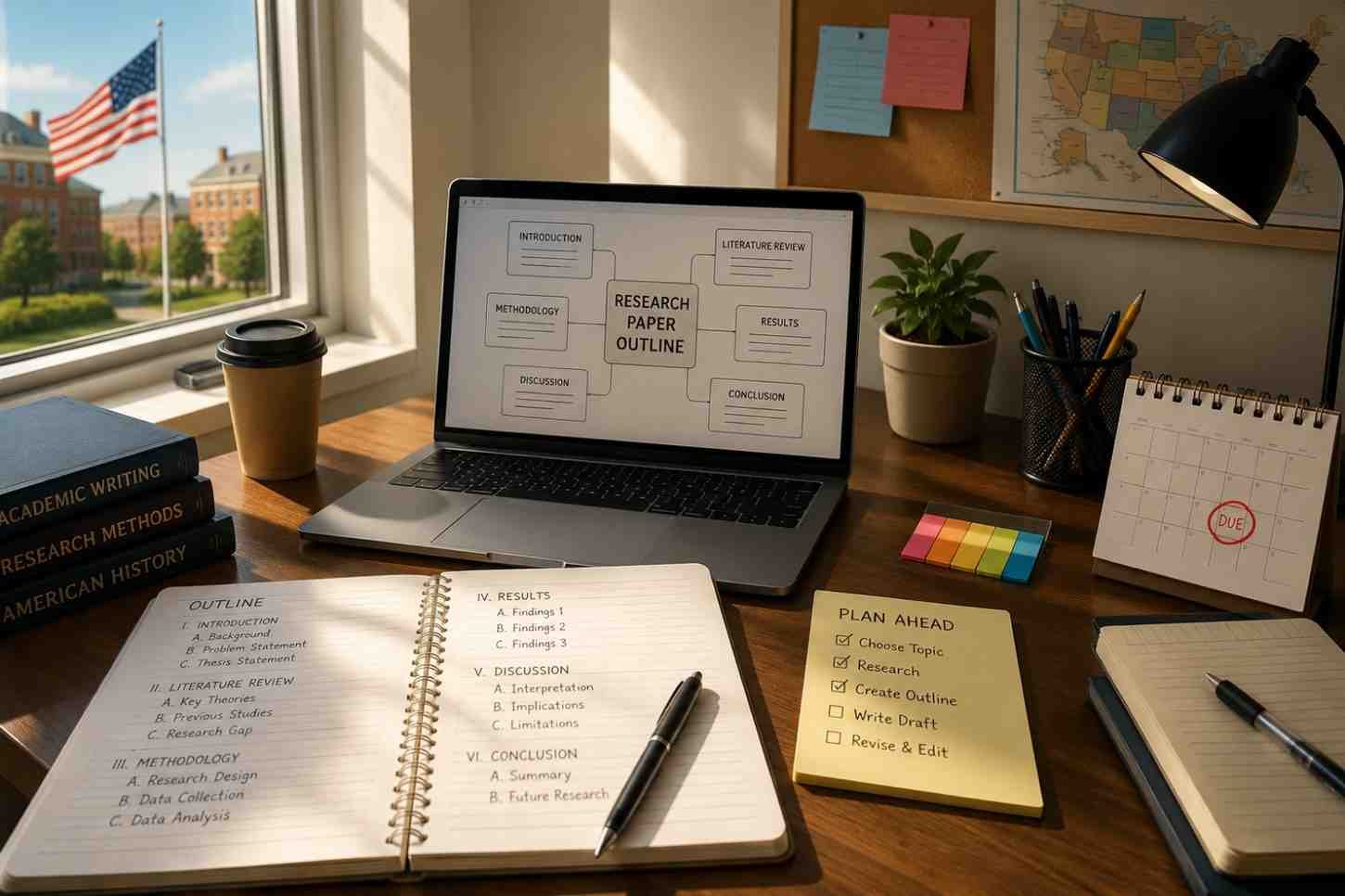
A strong research paper outline acts like a roadmap. It keeps arguments focused and prevents unnecessary sections from expanding the paper without adding value.
Plan Paragraph Goals Early
One helpful habit is assigning a purpose to every paragraph before drafting. Ask:
- What point does this paragraph prove?
- Which source supports it?
- How does it connect to the thesis?
This approach improves research paper structure because every section has direction before the writing even begins.
Keep Sections Narrow and Focused
Large sections often become repetitive. Breaking major ideas into smaller H3 subsections improves readability and organization.
That structure also helps during revision because locating weak arguments becomes easier.
Stop Over-Researching Before You Start Writing
Over-researching is one of the biggest hidden causes of academic stress. Students often believe they need “just one more source” before drafting.
The problem is that endless reading delays progress.
At some point, the academic research workflow has to shift from collecting information to building arguments. A messy draft with clear ideas is far more useful than another night of passive reading.
The best approach is to collect foundational scholarly sources first, then draft while identifying smaller research gaps naturally along the way.
Build a Workspace That Supports Focus

Planning is not only about schedules. Your environment affects concentration more than most students realize.
Digital distractions slow down deep reading and writing. Even short interruptions can break academic focus completely.
Use Focus-Based Writing Sessions
The Pomodoro Technique works well for long research sessions:
- 25 minutes of focused work
- 5-minute break
- Repeat several cycles
This system prevents burnout while keeping momentum consistent during long writing periods.
Separate Work and Relaxation Spaces
Students who study in the same environment where they relax often struggle to maintain concentration. Even a small dedicated writing area can improve focus levels significantly.
Simple changes in workspace habits often improve research productivity faster than complicated study systems.
Organize Citations While Researching
Citation management becomes stressful when postponed until the final hours before submission.
One missing source link or formatting issue can waste huge amounts of time late at night.
Save Sources Immediately
Tools like Zotero or Mendeley simplify source organization during the paper drafting process.
Whenever you read a source:
- Save the citation immediately
- Copy the DOI
- Add short notes explaining why the source matters
This creates a cleaner note-taking method and speeds up revision later.
Keep Research Notes Connected to Arguments
Do not save sources randomly. Connect notes directly to outline sections whenever possible.
That small habit reduces confusion during drafting and helps maintain logical flow across sections.
Accept the Messy First Draft

Perfectionism delays more research papers than poor writing skills.
Many students edit every sentence while drafting, which slows momentum and increases frustration.
The better approach is to separate drafting from editing.
Draft First, Edit Later
During the writing stage:
- Focus on argument flow
- Ignore small grammar issues
- Avoid sentence-level perfection
A rough draft gives you something tangible to improve. An unfinished draft creates stress without progress.
This mindset reduces writer’s block because the goal becomes completion instead of perfection.
Ask for Feedback Earlier Than You Want To
Waiting until the paper feels “finished” often leads to major rewrites near the deadline.
Sharing outlines or partial drafts earlier creates smaller correction cycles.
Feedback from tutors, professors, or peers can reveal:
- Weak argument transitions
- Confusing sections
- Missing evidence
- Structural problems
Fixing these issues gradually is much less stressful than rebuilding entire sections days before submission.
FAQs: Effective Research Paper Planning Strategies to Avoid Last-Minute Stress
1. How early should I start planning a research paper?
Starting at least two to three weeks before the deadline usually creates enough time for research, drafting, and revisions without rushing the process.
2. What is the biggest mistake students make while planning research papers?
Many students spend too much time researching and not enough time outlining or drafting. Over-researching often delays actual progress.
3. How can I avoid procrastinating during the writing process?
Breaking work into micro-milestones helps reduce mental overwhelm. Smaller tasks feel easier to start and complete consistently.
4. Why is outlining important for academic writing?
A detailed outline improves research paper structure, keeps arguments focused, and reduces writer’s block during drafting.
Final Thoughts
The difference between a stressful research paper experience and a manageable one usually comes down to planning quality. Students often assume pressure is unavoidable, but most academic stress develops from disorganized workflows, unrealistic timelines, and trying to handle everything at once. Once the process becomes structured into smaller phases, the workload feels far more controllable. Even difficult topics become easier to handle when each stage has a clear purpose and deadline.
Strong papers rarely come from last-minute intensity alone. They come from steady progress, realistic systems, and enough room to think clearly before submission day.