



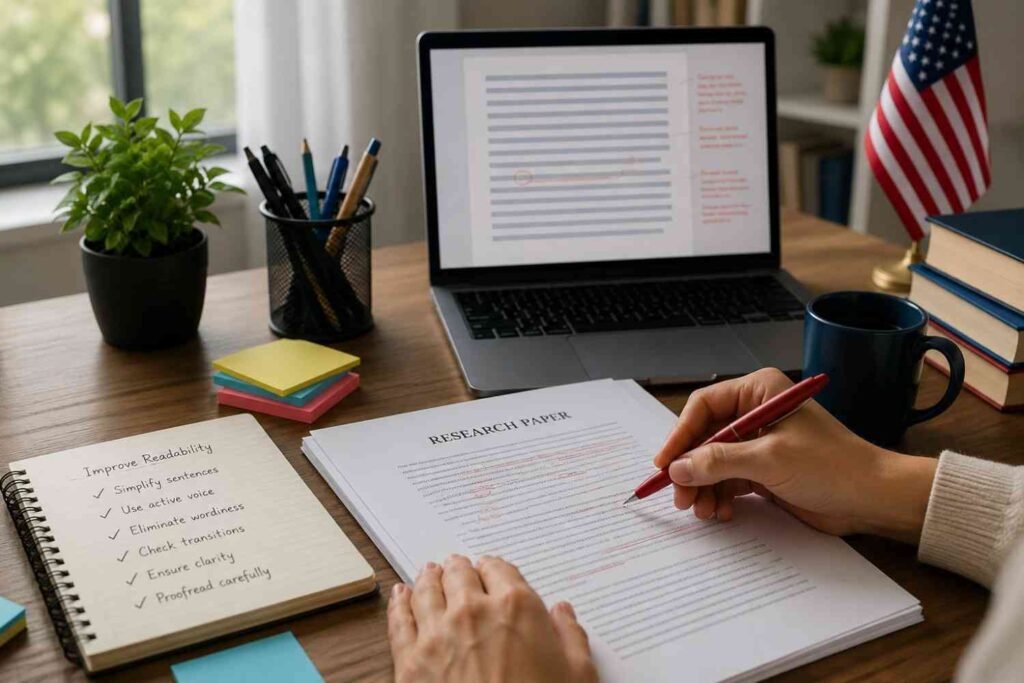
Most people spend weeks collecting data, writing literature reviews, and formatting citations, but the real struggle often begins during editing. A research paper can contain strong findings and still feel exhausting to read. That usually happens because the writing becomes too dense, repetitive, or difficult to follow. Many researchers do not notice these issues immediately because they are too close to the draft.
I realized this while reviewing a graduate-level paper filled with long paragraphs and technical explanations. The research itself was solid, but reading it felt like pushing through a wall of text. Once the sentences were tightened and the structure improved, the paper became far easier to follow. That is why readability matters so much. Clear academic writing keeps reviewers engaged and helps your arguments land with more impact.
Start By Fixing Sentence Structure

Keep Sentences Shorter
One of the easiest ways to improve research paper readability is by reducing sentence length during editing. Long academic sentences often bury the main point under unnecessary wording.
A good editing habit is keeping most sentences between 15 and 25 words. Shorter sentences improve rhythm and reduce mental fatigue for readers. This becomes even more important in methodology and discussion sections, where technical explanations already demand attention.
Instead of writing multiple ideas together, separate them into smaller statements with a clear focus.
Focus On One Idea At A Time
Many research papers become difficult to read because one sentence tries to explain too much. Readers lose track when several concepts compete for attention at once.
During editing, check whether each sentence communicates one primary idea. Then check whether each paragraph revolves around one theme only. This creates cleaner paragraph clarity and improves logical flow throughout the paper.
If a paragraph crosses 200 words, it usually needs restructuring. Breaking large text blocks into smaller sections instantly improves readability.
Remove Wordiness During Revision
Cut Unnecessary Phrases
Academic writers often use longer phrases that can easily be simplified. These extra words make the paper heavier without adding meaning.
For example:
- “In order to” can become “to.”
- “Due to the fact that” can become “because.”
- “In the event that” can become “if.”
These small edits improve sentence flow quickly. They also make your writing sound more confident and direct.
Eliminate Weak Fillers
Another common issue during research paper editing is overusing intensifiers and vague wording. Words like “very,” “extremely,” or “highly significant” often weaken academic writing instead of strengthening it.
The same applies to double negatives. Phrases such as “not uncommon” slow readers down because the brain has to process the meaning twice.
Clear academic writing usually sounds cleaner, simpler, and more precise.
Improve Flow Between Sections

Use Better Transitions
Even strong research can feel disconnected when transitions are weak. Readers should never feel like they are jumping randomly between ideas.
Simple transition words help guide the reader naturally:
- However
- In contrast
- Consequently
- Similarly
- Therefore
These signposts improve reading rhythm and help reviewers understand how one argument connects to the next.
Good transitions become especially important in literature reviews and results discussions where multiple findings are compared.
Maintain Consistent Terminology
One small mistake that hurts readability is changing terms throughout the paper. For example, switching between “participants,” “subjects,” and “respondents” can confuse readers even if they technically mean the same thing.
Choose one term and stay consistent across the entire manuscript. The same rule applies to variables, frameworks, abbreviations, and data labels.
Consistency reduces cognitive load and helps readers stay focused on the actual research findings.
Break Large Sections Into Smaller Parts
Use Helpful Subheadings
Dense pages filled with uninterrupted text feel intimidating. Smaller H3 sections make research papers easier to navigate and skim during peer review.
Specific subheadings also improve paper structure because they signal what each section is trying to achieve. This helps readers process information faster.
For example, instead of using vague subheads like “Results,” try more descriptive formatting such as:
- Participant Response Patterns
- Key Behavioral Findings
- Survey Outcome Analysis
Clear structure improves both readability and organization.
Frontload Important Information
One editing technique that improves readability quickly is placing the main idea at the beginning of the sentence instead of hiding it at the end.
Reviewers often skim academic papers under time pressure. If critical findings appear too late, the message loses strength.
Compare these approaches:
Weak:
“The experiment, after several rounds of observation and additional analysis, revealed a measurable improvement.”
Better:
“The experiment revealed a measurable improvement after additional analysis.”
The second version reaches the point faster and feels easier to process.
Edit In Multiple Passes Instead Of One
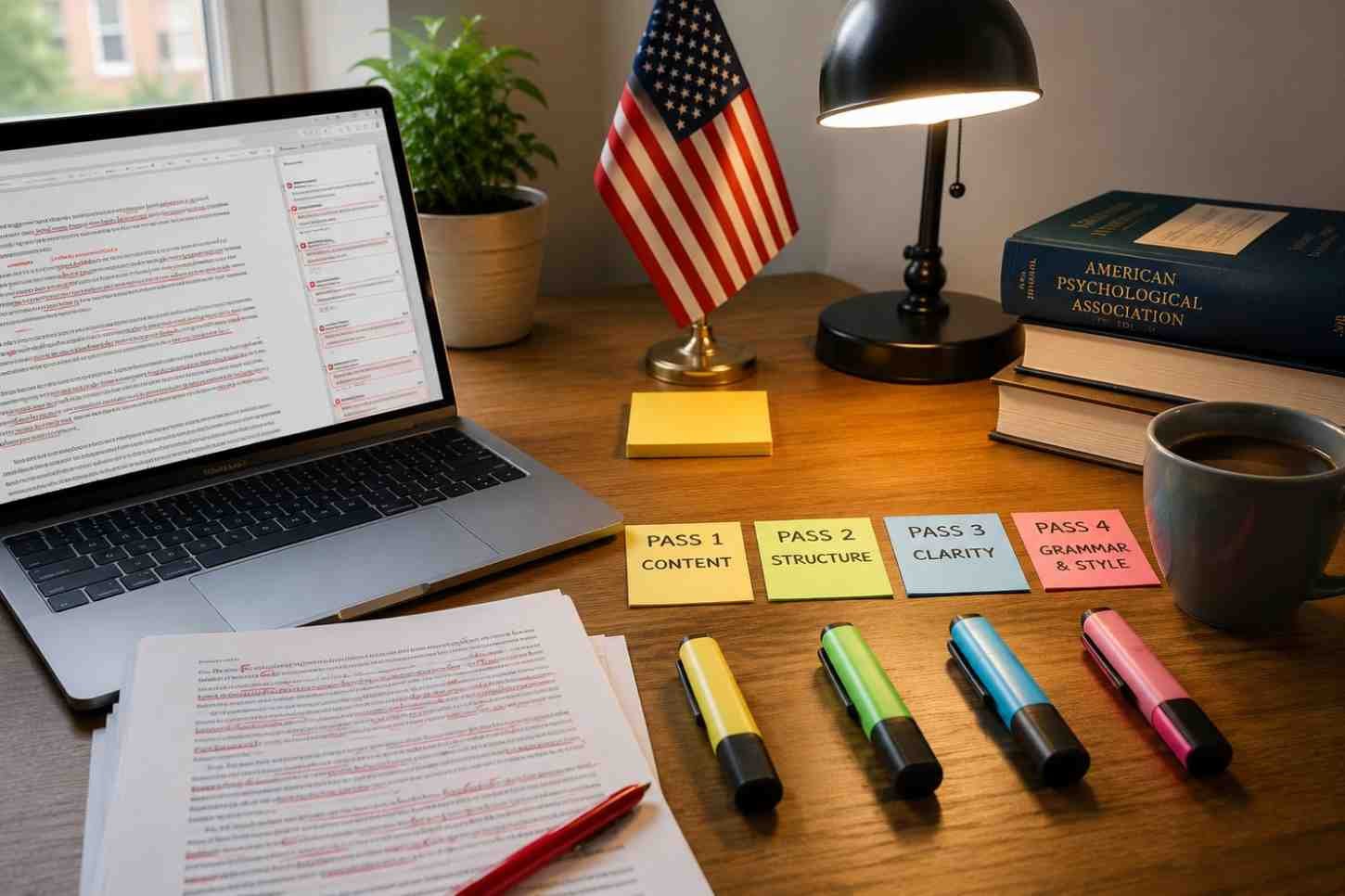
Separate Structural Editing From Grammar
Trying to fix grammar, structure, citations, and readability at the same time usually creates a messy editing process.
A better approach is dividing editing into layers:
- First pass: structure and flow
- Second pass: sentence clarity and grammar
- Third pass: formatting and citations
This method improves focus and prevents smaller corrections from distracting you from larger readability problems.
Many experienced researchers follow this layered academic editing process because it saves time and produces cleaner revisions.
Read The Paper Out Loud
Reading your paper silently can hide awkward phrasing because your brain automatically fills gaps. Reading aloud exposes sentences that feel clunky or difficult to process.
If a sentence sounds unnatural when spoken, it will probably slow readers down, too.
This trick works especially well for discussion sections where academic writing can become overly complicated during revision.
Some researchers also review papers backward paragraph by paragraph. It sounds strange, but it helps separate the writing from the narrative flow, making editing errors easier to spot.
Pay Attention To Reader Experience
Think Like A Reviewer
Many researchers edit only for correctness. Strong readability editing goes further by considering the reader’s experience.
Reviewers often read multiple papers in one sitting. Dense writing creates fatigue quickly. Clear formatting, concise language, and smoother transitions make your work easier to engage with.
This does not mean oversimplifying the research. It means presenting complex ideas in a way that feels organized and readable.
Balance Clarity With Academic Tone
Some writers fear that simplifying language will make their work sound less scholarly. In reality, the strongest academic papers often explain difficult ideas using surprisingly direct language.
Clarity reflects confidence.
During editing, ask yourself:
- Can this sentence be shorter?
- Does this paragraph repeat information?
- Is the argument immediately understandable?
- Would a first-time reader follow this logic easily?
These questions improve readability more than obsessing over complicated vocabulary ever will.
Writers who actively focus on how to avoid plagiarism in research papers also tend to produce cleaner drafts because they spend more time paraphrasing thoughtfully instead of forcing copied academic phrasing into the manuscript.
FAQs: Easy Ways To Improve Research Paper Readability During Editing
1. How can I improve readability without oversimplifying academic content?
Focus on clarity instead of simplification. You can keep technical accuracy while using shorter sentences, better transitions, and cleaner paragraph structures.
2. Why do long paragraphs hurt research paper readability?
Large text blocks create visual fatigue and make information harder to process. Smaller paragraphs improve flow and help readers follow arguments more easily.
3. Is the active voice better for academic writing?
Active voice usually improves clarity because it makes sentences more direct. However, passive voice can still work in methodology sections where the action matters more than the actor.
4. What is the best way to edit a research paper efficiently?
Editing in layers works best. Start with structure and readability first, then move to grammar, citations, and formatting during later passes.
Final Thoughts
Improving readability during editing is less about sounding smarter and more about communicating ideas effectively. Some of the best research papers are surprisingly simple to read because the writer focused on flow, structure, and clarity instead of overly formal wording. Small changes like shortening sentences, improving transitions, and breaking large paragraphs can completely change how a paper feels to the reader. These edits may seem minor individually, but together they create a stronger and more professional manuscript.
Good research deserves writing that people can actually follow. Strong readability helps your work stay clear, persuasive, and memorable long after the first review.